KARPENKO
Washington National GuardUnmanned systemsInnovation labs

Adapt.Innovate.Win.

Tap the open scope to raise a trackMove over the open scope to become a track. Click to raise one.

Now · November 2026

What I'm working on

Four efforts, one habit: find the real problem, build something cheap that answers it, and put it in front of the people who will use it.

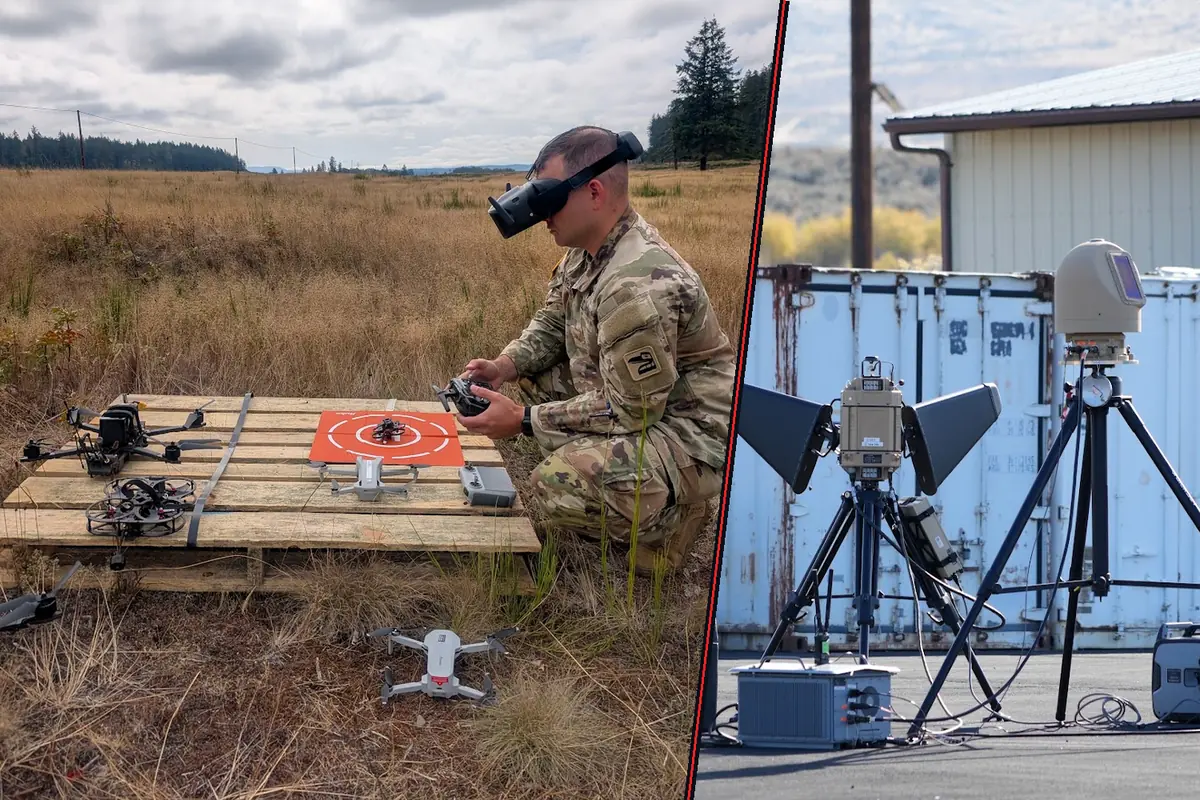
A soldier flying an FPV drone beside a pallet of small drones, next to counter-UAS sensors on tripodsCurrent role

Unmanned and counter-unmanned systems

Director of Unmanned Systems · Joint Force Headquarters · Washington National Guard

Drones, ground robots and the systems that defeat them, across the Washington Army and Air National Guard. The work is fielding, training and policy, and making sure what units learn about unmanned systems gets shared instead of relearned.

UASair
UGVground
UUVwater
C-UxSdefeat
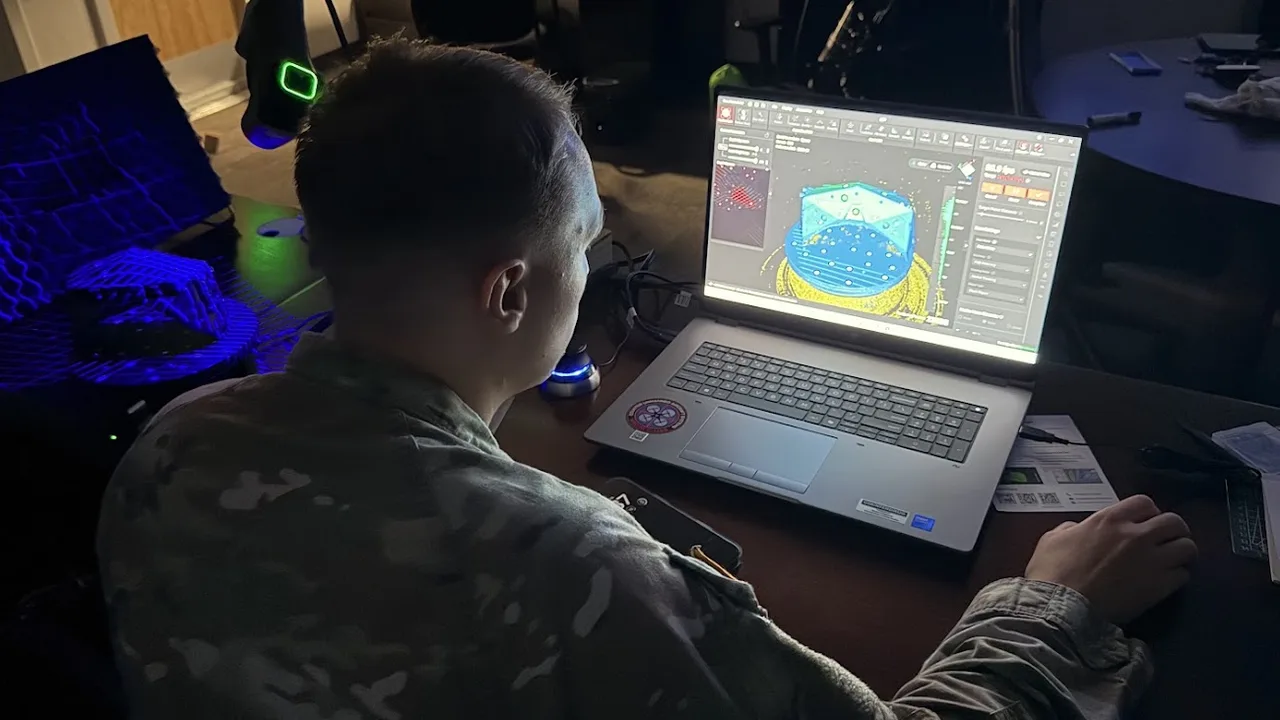
A soldier processing a 3D scan on a laptop in the Mission Advancement LabOpen for projects

WRCTC Mission Advancement Lab

MAL · joint Army and Air National Guard innovation lab

The MAL is the innovation lab at the Western Regional Counterdrug Training Center. It turns a problem into a tool or a better way to train, and gets it into a course faster. It also helps law enforcement partners with problems that have a counternarcotics nexus.

FDM & resin printingLaserElectronics3D scanningSublimationVideo
mal.wrctc.org
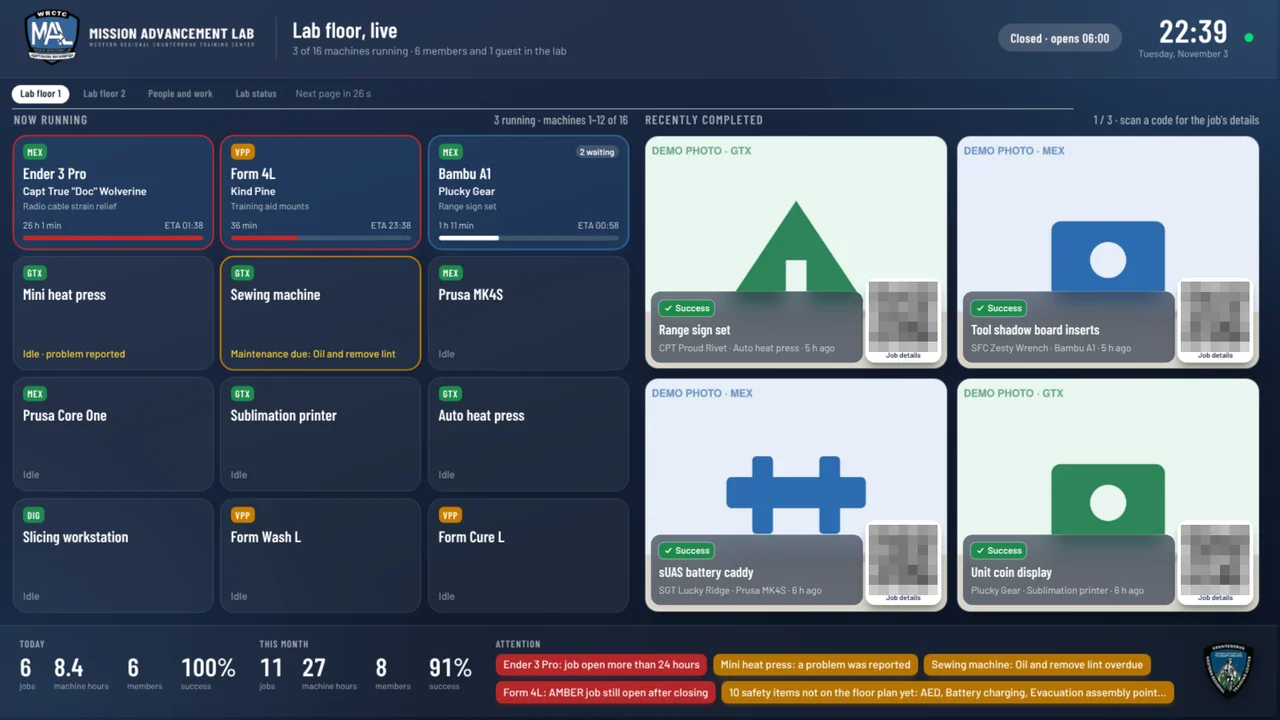
The ANVIL lab dashboard showing machines running and recently completed jobsIn build

ANVIL

Activity Network View for Innovation Labs

The software that runs the MAL, written so any innovation lab can run it. Every job leaves a record, failed ones included, so what one lab learns is still there for the next person.

  1. 01Scan the machineQR at the printer or laser starts the job
  2. 02Run itWho, what, which material, how long
  3. 03Photograph the resultGood or bad, it goes in the record
  4. 04Learn from itTraining, inventory, maintenance, dashboards
Mission Advancement LabWRCTC · operating model
An adaptation cycle · five phases, every project

The SWIFT adaptation cycle

SWIFT is an adaptation cycle: how the Mission Advancement Lab turns a problem into a tool or a better way to train, and gets it into a course faster. Each phase answers one question and leaves one record, so what the lab learns is in a form the next course or unit can use.

WRCTC Mission Advancement Lab crest: a blueprint-gridded shield with the letters MAL, the crossbar of the A running on as an arrow, over the motto Adapt faster, win smarter
Design principles
Activities, not gatesSWIFT tells a member which question they are answering now and what to record. It does not control access to the next step.
It scales; it does not shortenAn afternoon or eighteen months are both complete runs. Depth and final maturity change, never the number of phases.
Every phase leaves a recordIf a phase leaves no artifact, it did not happen. That is what makes SWIFT a knowledge-management tool and not just a workflow.
The originator decides when to stopStopping is a legitimate outcome. Stopping with a record is a successful one.
Three lanes, same five phases
1Field FixTRL 2–4Does this solve my problem? The originating course or unit adopts it, and the record is filed so a peer can find it.
2NetworkTRL 4–5Can another unit build this? Another lab reproduces it from the build package. That reuse is the point.
3ValidatedTRL 6Will it survive contact and transition? A package goes to a program manager, industry, a partner lab or another state.

TRL is the Department of Defense's nine-level Technology Readiness Level scale. SWIFT adds an informal TRL 0 for a well-defined problem with no solution yet, and stops at TRL 6. TRL 7–9 belongs to a program of record.

Adapt faster, win smarter.SWIFT · developed at the WRCTC Mission Advancement Lab
Custom makes

Coins, plaques and custom builds

Challenge coins, tokens, challenge cards, plaques, awards and signs too big for one sheet of plywood. Multicolor 3D printing for relief, lasers for engraving and cutting, UV printing for full color.

Have a custom project? Reach out using the phone number on my card.

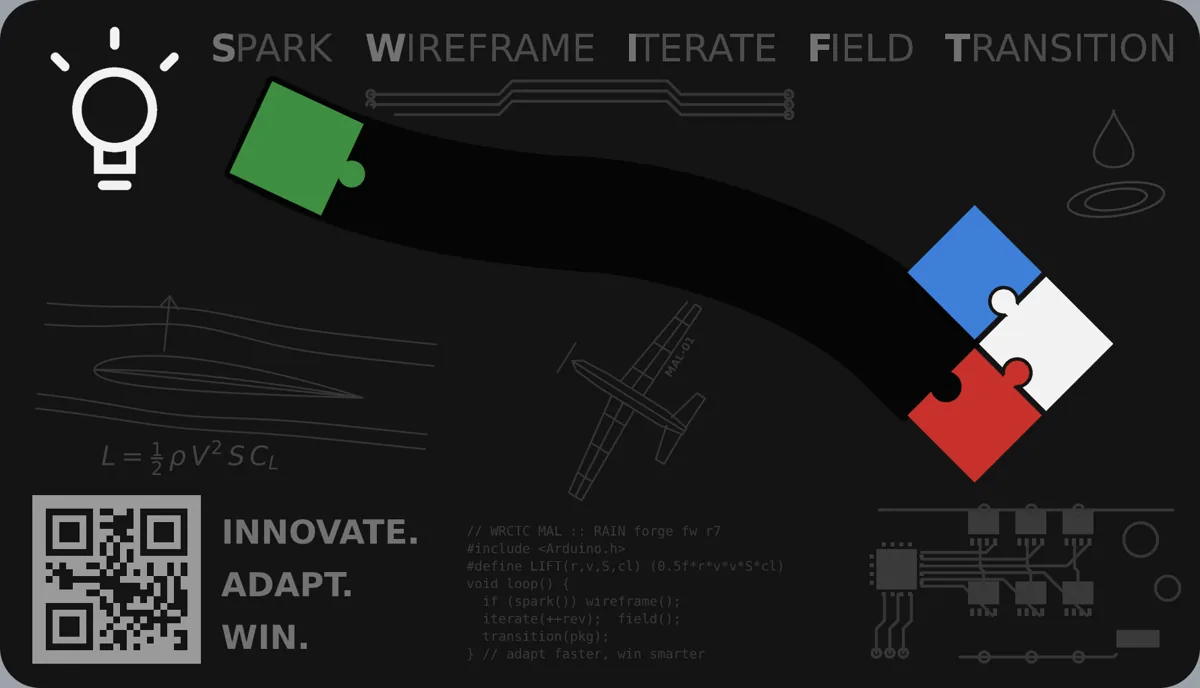
Laser engraving layout for the back of the business cardThe card you're holding

A business card that does something

Printed in place, so the slider is captive in its track with no assembly. The front is the counter-UAS problem: sensor, effector, threat. The back is the same track carrying the missing piece from an idea to a solved puzzle, under the five SWIFT phases. Twenty revisions to get the fit, the click detents and the engraving right.

v20revision printed
0.4 mmslider air gap
5filaments, one print
21×21QR modules, laser engraved
PETG PLA